

Personalized medicine, which seeks to match the right drugs to the right patients at the right time, has been most successful in cases where there is a clear genetic linkage between a disease and a therapy. This is not the case for many diseases, including most immune-mediated diseases, which involve more complex genetics and require new approaches for development of personalized therapies.
Our goal is to develop and use cutting edge systems biology approaches to elucidate molecular signatures of complex immune diseases, including autoimmunity and cancer. We expect these signatures to elucidate fundamental mechanisms of disease and response to therapy; new pharmacodynamic, patient stratification, and treatment response biomarkers; and new therapeutic approaches.
Examples of new therapeutic approaches include combination therapies for type 1 diabetes (T1D) predicted from resistance mechanisms and molecular signatures generated by RNA sequencing (RNA-seq) of treated patient whole blood samples.

Peter Linsley, PhD
Research Projects
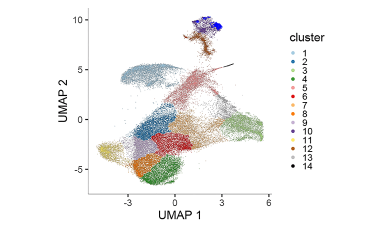
Elucidating immune processes in tumors that affect patient survival and response to therapy
We are investigating whether Immune Checkpoint Inhibitor blockade in cancer treatment promotes the proliferation and survival of T cells specific for self-antigens and tumor antigens that ultimately contribute to adverse immune events or response to therapy.
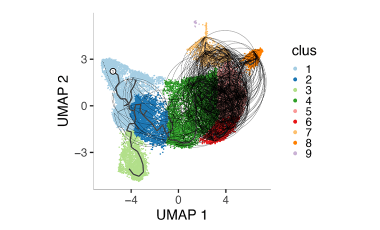
Exhausted CD8+ T cell populations linked to beneficial response in T1D
Using next generation sequencing approaches we are investigating the T cell ancestry and phenotypes of exhausted CD8+ T cell populations that are associated with beneficial response to T cell depleting agents in T1D.
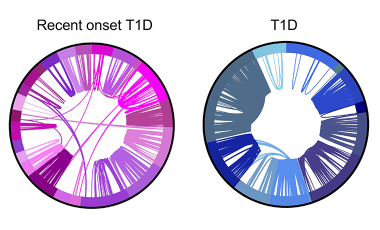
Shared germline-like TCR alpha chains in autoreactive CD4+ T cells in T1D
We found a class of autoreactive T cell receptors (TCRs) that share TCR TRA chains between individuals and that these TCR TRAs are elevated in new-onset T1D patients. We are investigating the role of these public TCRs in autoimmune and anti-infectious agent immune responses.
Featured Publications
Neutrophil-enriched gene signature correlates with teplizumab therapy resistance in different stages of type 1 diabetes
The Journal of Clinical Investigation
The Type 1 Diabetes T Cell Receptor and B Cell Receptor Repository in the AIRR Data Commons: a practical guide for access, use and contributions through the Type 1 Diabetes AIRR Consortium.
Diabetologia
Teplizumab induces persistent changes in the antigen-specific repertoire in individuals at-risk for type 1 diabetes.
The Journal of Clinical Investigation
Germline-like TCR-α chains shared between autoreactive T cells in blood and pancreas.
Nature Communications
Interconnected lineage trajectories link conventional and natural killer (NK)-like exhausted CD8(+) T cells beneficial in type 1 diabetes.
Communications Biology

“Keep Asking the Next Question:” Lessons Rhodes Scholar Shubham Bansal Learned at BRI
Learn more about how his time at BRI helped shape 2025 Rhodes Scholar Shubham Bansal.
Why a New Cancer Treatment Can Lead to Autoimmunity
Why do some people taking checkpoint inhibitors for cancer develop side effects that look like autoimmunity? And could these side effects actually be a sign that the treatment is working? Peter Linsley, PhD and Ty Bottorff, PhD, intend to find out.

Immunology to Change Lives: Where We're Going in 2023
BRI was formed with a clear plan: First, answer key fundamental questions about the immune system. Then, build on those answers to change lives. This is a very exciting time because we’re reaching that second stage of the plan.