


BRI’s Approach Inspires Mara’s Support
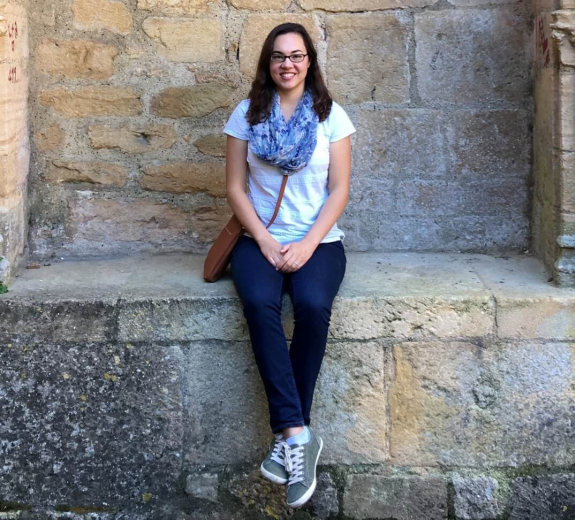
At age 14, Mara, who is now in her 30s, was diagnosed with type 1 diabetes. A few years ago, she also learned she had celiac disease and was recently confronted with a rheumatoid arthritis diagnosis. All three conditions are autoimmune diseases, which happen when immune system cells mistakenly start attacking healthy tissue.
“With every diagnosis, there’s a lot to process. Like grief, there are ranges of emotions and you can experience them all at once,” she says. “But you learn to manage and keep moving forward.”
While Mara cannot ignore the constant decisions she makes about food, lifestyle and medication, she has hardly held back living. She’s earned a PhD in Ancient Greek and Latin and now works for a nonprofit supporting cancer patients. In her off time, she’s busy being creative in the kitchen, planning her next travel adventure, and spending time with her husband and her border collie-lab mix, Phoebe.
A Realist Finds Optimism in Research
There’s minimal sugar coating anything with Mara — having an autoimmune disease is hard. It’s often exhausting and rather inconvenient. Pain from rheumatoid arthritis may change her plans for exercise, which is important for T1D. And while diabetes doesn’t restrict her diet, celiac does and food is crucial to maintaining the right blood sugar levels.
After she’s done calculating medications and adjusting her activities for pain management, she’s documenting everything – insulin doses, meals, medication, blood sugar, pain. Data is crucial for Mara and her doctors to maintain the best treatment plan.
But as real as she is, she’s also optimistic.
“Science has changed a lot. From finger pricks to continuous glucose monitors, living with diabetes is much more manageable today,” she says.
Mara gives to Benaroya Research Institute (BRI) because of their commitment to understanding the immune system as a whole. She commends BRI’s pledge to find ways to slow or even prevent disease along with improving therapies to treat symptoms.
“When we answer questions about celiac or rheumatoid arthritis, new doors open for discoveries about other autoimmune diseases too,” Mara says. “It’s crucial that scientists work together, and that’s why I choose to give to BRI.”
Changing Outcomes and Assumptions
Mara is also passionate about increasing autoimmune disease awareness for everyone.
“It can be far more debilitating than people realize. We need a way to better communicate what’s happening in our bodies, particularly when care is divided up among different specialists,” she says. “Part of the problem is, we don't know exactly how or why these diseases start.”
Mara believes this understanding begins with science. When researchers have a clearer picture of what causes autoimmune diseases, doctors, patients and the community can move forward together.
“Everyone knows someone with an autoimmune disease, whether they realize it or not,” she says. “People are incredibly compassionate, but if we’re all hiding the fact that our child or partner, or we ourselves are living with a lifelong condition, we miss opportunities to support each other. And a little support can go a long way.”
You Might Also Like
Innovation Fund Spotlight: Pioneering a New Generation of Tetramers
In the late 1990s, Bill Kwok, PhD, pioneered MHC class II tetramers, a game-changing tool in immunology research. Tetramers have fueled countless research breakthroughs because they enable scientists to find extremely rare cells and extract them to study in precise detail.
New Technology Opens the Door to Understanding the Earliest Stages of T1D
Eddie James, PhD, earned a new grant to explore early cell changes that lead to T1D, using a new tool pioneered at BRI.
Game-Changing Treatment for T1D Enters Clinical Trials
A new T1D treatment, built on decades of research at BRI and other institutions, has entered human clinical trials.
Immuno-what? Hear the latest from BRI
Keep up to date on our latest research, new clinical trials and exciting publications.