

People with Down syndrome often experience health challenges that resemble aspects of accelerated aging, including a higher risk of infections and reduced protection from some vaccines, such as influenza and COVID-19. Understanding why these differences occur — and how to address them — is central to the Khor Lab's work.
Researchers in the Khor Lab have created one of the most detailed maps to date of the immune system in people with Down syndrome. This work revealed a striking insight: on average, the immune system of a person with Down syndrome resembles that of a person in the general population who is as much as 17 years older. To make this discovery, the team developed a novel, broadly applicable analytical approach that measures “immune age,” offering a new way to understand immune health across the lifespan. The lab is already exploring how immune age could help inform clinical care and decision-making today.
Building on this foundation, the Khor Lab is investigating how trisomy 21 — the presence of an extra copy of chromosome 21 — drives changes in immune function over time. By defining the biological pathways that contribute to advanced immune aging, the team aims to identify therapeutic strategies that could slow, prevent or even reverse these changes in people with Down syndrome. Insights gained through this work may also point to approaches that support healthier immune aging more broadly.
This research has highlighted the value of using Down syndrome as a biological “lens.” By closely examining immune regulation in this population, researchers have identified shared patterns of immune dysfunction in other conditions, including autoimmune diseases such as type 1 diabetes. The Khor Lab is now expanding this lens-based approach to uncover additional connections across immune system diseases, with the goal of accelerating discovery and translation.
Research in the Khor Lab is conducted in close partnership with Rebecca Partridge, MD, and in collaboration with the regional Down syndrome community. These efforts are supported by the BRI Down Syndrome Biorepository, a growing resource that enables deep, longitudinal study of immune health while fostering meaningful partnerships with participants and families. Together, this work reflects BRI’s commitment to rigorous science, meaningful collaboration and research that keeps people — and the conditions that affect their lives — at the center.
Additional Research Projects

Dissecting the Mechanisms Driving Autoimmunity in People With Down Syndrome
People with Down syndrome face a strikingly higher risk of developing autoimmune disease — in some cases up to 100 times greater than in the general population.
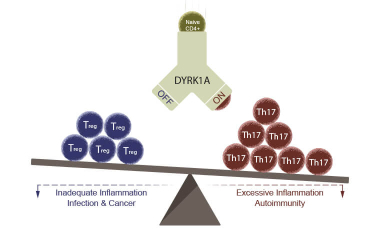
Understanding How DYRK1A Regulates T Cell Biology
A healthy immune system depends on balance. Inflammation is essential for fighting infection, but when it becomes excessive or misdirected, it can drive autoimmune and inflammatory disease.