



Leading a New Center for Asthma and Allergy Research
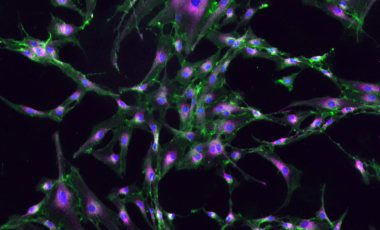
Caption: Culture of airway epithelial cells, with cilia on upper surface, similar to what is seen in the human lung.
Benaroya Research Institute at Virginia Mason (BRI) is now leading an Asthma and Allergic Diseases Cooperative Research Center in Seattle to study the immune system response to allergens in the lungs.
The National Institutes of Health recently awarded BRI an $8 million grant to lead the center — a collaboration of researchers from BRI, UW Medicine and Seattle Children’s Research Institute. “Over the next five years, we will work together to gain insights into the lung epithelium — the interface between the inside of the lung and the outside environment — to inform the development of new treatments and therapies for allergies and asthma,” says Steven Ziegler, PhD, who will lead the center. He is the director of BRI’s Immunology Research Program and Academic Affairs.
Impacting Lives
“Because we’re using cells from both children and adults, as well as a culture system that closely mimics the actual structure of the lung, our findings will positively impact the lives of people living with allergies and asthma,” says Dr. Ziegler. “This study wouldn’t be possible without collaboration; we’re grateful for the collegiality of the immunology community in Seattle, through which we’re able to fight immune system diseases together.”
The research will focus on testing whether the airway epithelial cells, the layer of cells forming the lung epithelium, is the major regulator of responses to outside attack from allergens and respiratory viruses. Based on previous studies, the scientists predict that airway epithelial cells from people with asthma will differ in how this regulation controls infections and allergic responses. Each project will test a different aspect of this response, with the epithelium providing the common link between them.
Other Awards
This latest grant follows a $2.9 million grant recently awarded to BRI to expand studies of interleukin-33, a protein that helps drive the immune response to allergic reactions. BRI researchers discovered this critical pathway in peanut allergy may also extend to other food allergies.
BRI and Virginia Mason Medical Center were also recently selected to join the Food Allergy Research & Education Clinical Network, an initiative that aims to accelerate the development of drugs as well as improve the quality of care for patients with food allergies. BRI and Virginia Mason are one of 28 leading research and care sites nationwide that provide high-quality clinical and subspecialty food allergy expertise and services, and that are focused on applying new evidence-based knowledge to this important field. These centers also meet high standards for clinical care, teaching and clinical research.
Also, BRI Assistant Member Erik Wambre, PhD, was recognized last year with a Food Allergy Research & Education Investigator Award to support research in food allergy, specifically peanut allergy.
Leading Innovation
“These grant awards speak to the tremendous work taking place at BRI and other research institutions in the region. Together, we are a leading source of innovation and progress in the fight for human health,” says BRI President Jane Buckner, MD. “Only through these collaborations among investigators will we be able to turn the tide against these lifelong diseases so that we can move beyond treating and containing them, and instead focus on preventing them from ever taking hold.”
You Might Also Like
Innovation Fund Spotlight: New Tool Enables Scientists to Collect More Data From Rare Cells
Scientists know that cells of the immune system attack healthy tissue in autoimmune disease. But they don’t know exactly when those cells go awry, what drives them toward disease or if that process can be slowed or stopped to prevent disease. BRI has been instrumental in research that led to the first medicine to delay the onset of type 1 diabetes. Now, Peter Morawski, PhD, and Arpit Mishra, PhD, are building on that work and exploring early intervention in other autoimmune diseases.
Game-Changing Treatment for T1D Enters Clinical Trials
A new T1D treatment, built on decades of research at BRI and other institutions, has entered human clinical trials.
How Does Wildfire Smoke Impact the Immune System?
As wildfire smoke becomes more common in the Pacific Northwest, BRI scientists are learning more about how it influences immune system function. We asked Dr. Megan Smithmyer about her research in this area and a new study examining the immune systems of wildland firefighters.
Immuno-what? Hear the latest from BRI
Keep up to date on our latest research, new clinical trials and exciting publications.