



Your Guts & Autoimmune Disease
A microbiome is a collection of microorganisms that create a “mini-ecosystem” – and there are 100 trillion bacteria inside your intestinal tract! Many gastrointestinal (GI) bacteria live in the gut and help with digestion. But these “good bacteria” could cause serious infections if they invaded other parts of the body.
One puzzle is figuring out how immune cells know when to tolerate these bacteria and when to attack them. Almost 70 percent of the immune system is in the GI tract. One theory is that the GI tract is a “school” where immune cells learn how to be tolerant of things they should not attack.
If immune cells don’t learn the right lessons, they might attack the body’s own cells and cause autoimmune disease. The immune system may also influence the gut microbiome by suppressing some bacteria while letting others flourish.
Scientists are discovering that changes in the gut microbiome are correlated with autoimmune disease.
- A University of California study found that two genera of gut bacteria, Acinetobacter and Akkermansia, were four times more abundant in multiple sclerosis patients than in people without the disease. The researchers also showed that a genus of bacterium, Parabacteroides, is four times more abundant in people without MS.
- Harvard Medical School researchers studied a promising link between the gut microbiome and type I diabetes. A recently published study showed how the gut microbiome shaped the immune-modulating effects of the HLA/MHC complexes in diabetes.
These studies and others signal great progress and pave the way for more studies on how the gut microbiome interacts with the immune system – and autoimmune disease.
Looking for tips on a healthy gut microbiome? Check out this blog post.
You Might Also Like
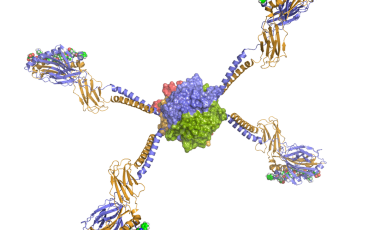
Innovation Fund Spotlight: Pioneering a New Generation of Tetramers
In the late 1990s, Bill Kwok, PhD, pioneered MHC class II tetramers, a game-changing tool in immunology research. Tetramers have fueled countless research breakthroughs because they enable scientists to find extremely rare cells and extract them to study in precise detail.
New Technology Opens the Door to Understanding the Earliest Stages of T1D
Eddie James, PhD, earned a new grant to explore early cell changes that lead to T1D, using a new tool pioneered at BRI.
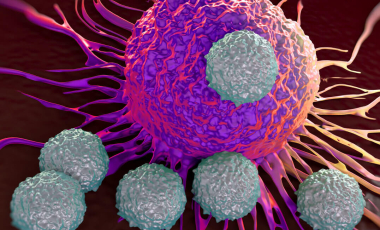
Fundamental Research is Paving the Way for New MS Treatments
BRI's Estelle Bettelli, PhD, is investigating whether targeting resident memory T cells could lead to new therapies for multiple sclerosis.
Immuno-what? Hear the latest from BRI
Keep up to date on our latest research, new clinical trials and exciting publications.